
Catalogue crates, not one sleeve at a time
Pull a crate into the light and photograph it. AI drafts an entry per sleeve it can see, each with its own cropped photo; you correct the titles and confirm. Repeat until the wall is on the record.
Vinyl & records
Shoot the shelf or a crate at a time. AI drafts an entry per record it can see — you fix the titles, note the pressing, and file each one to the shelf or crate where it actually lives. Your copies, your condition notes, your photos.
What you get
Pull a crate into the light and photograph it. AI drafts an entry per sleeve it can see, each with its own cropped photo; you correct the titles and confirm. Repeat until the wall is on the record.
Shelves and crates become locations, so a search for the title tells you where the copy lives. At the record fair, a ten-second search settles whether you already own the pressing.
Note the pressing, the sleeve and media condition, and what the copy is worth — free-form, in your own grading words. An itemised PDF with totals or a spreadsheet export puts a number on the whole wall.
How it works
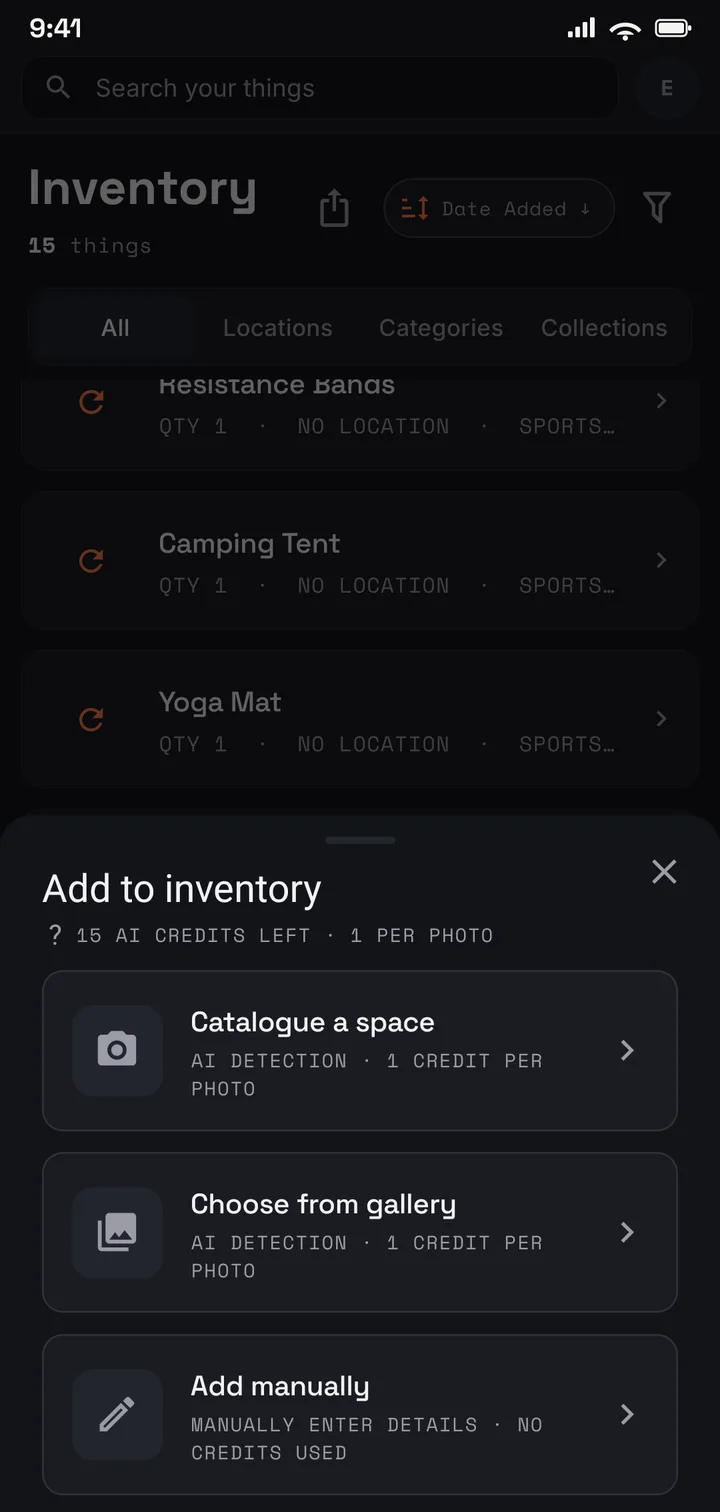
Shoot a shelf or a crate at a time.
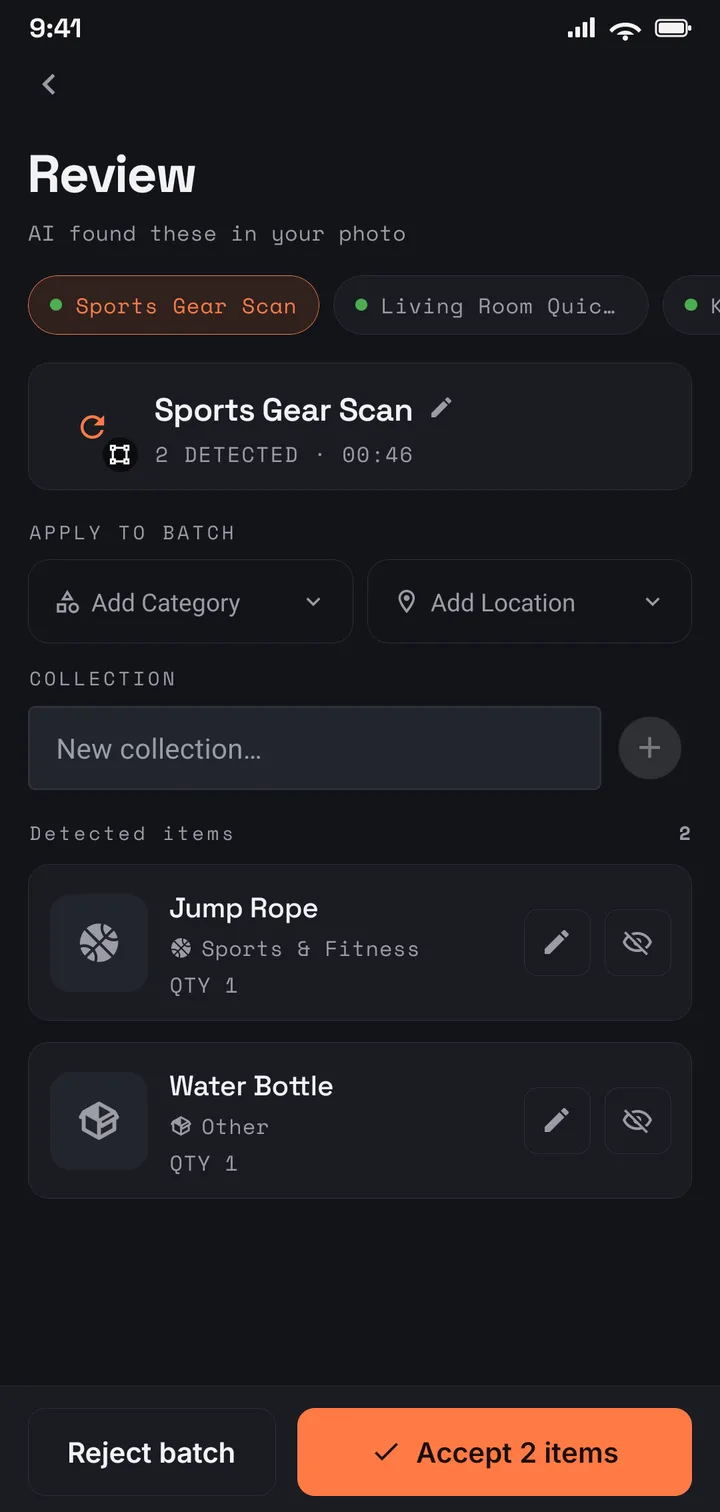
AI drafts an entry per record it can see; you fix titles and confirm.
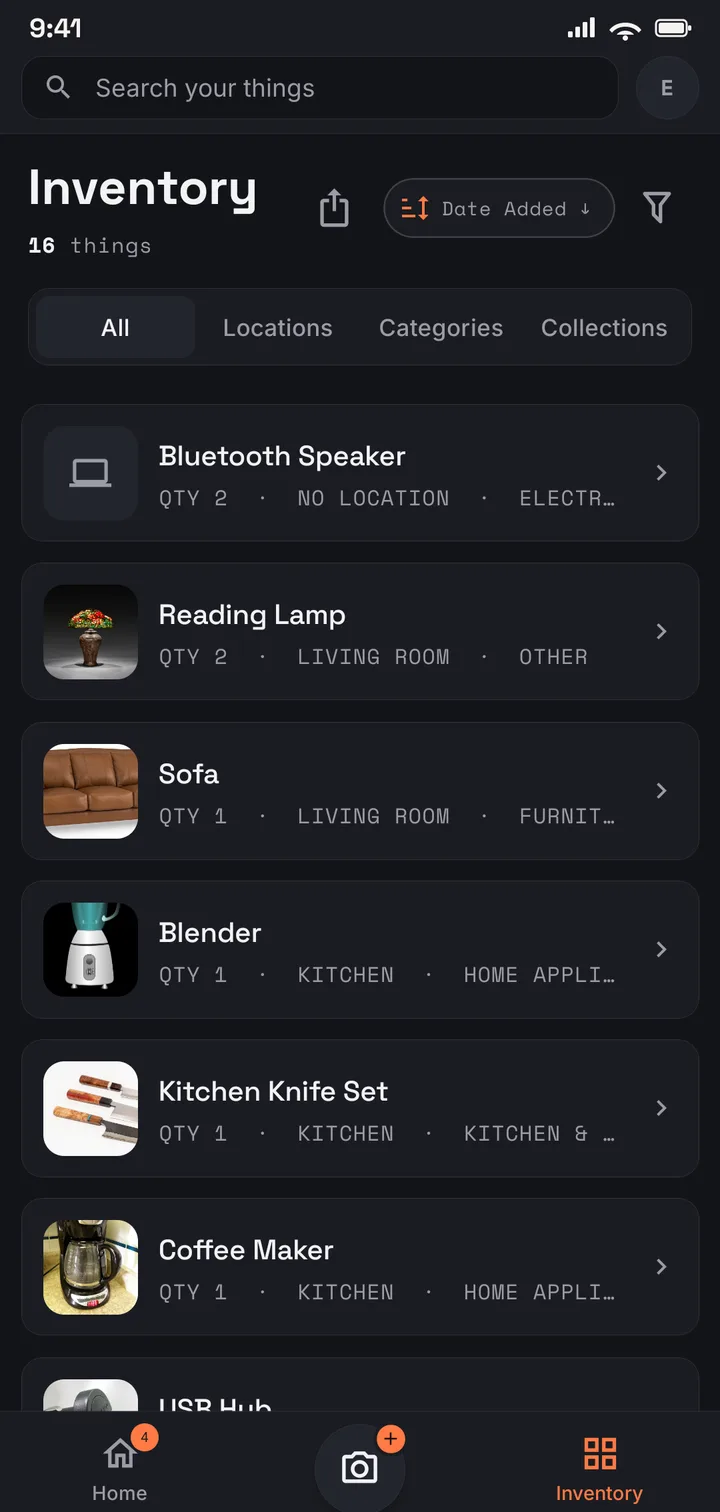
Search a title and see exactly which crate it lives in.
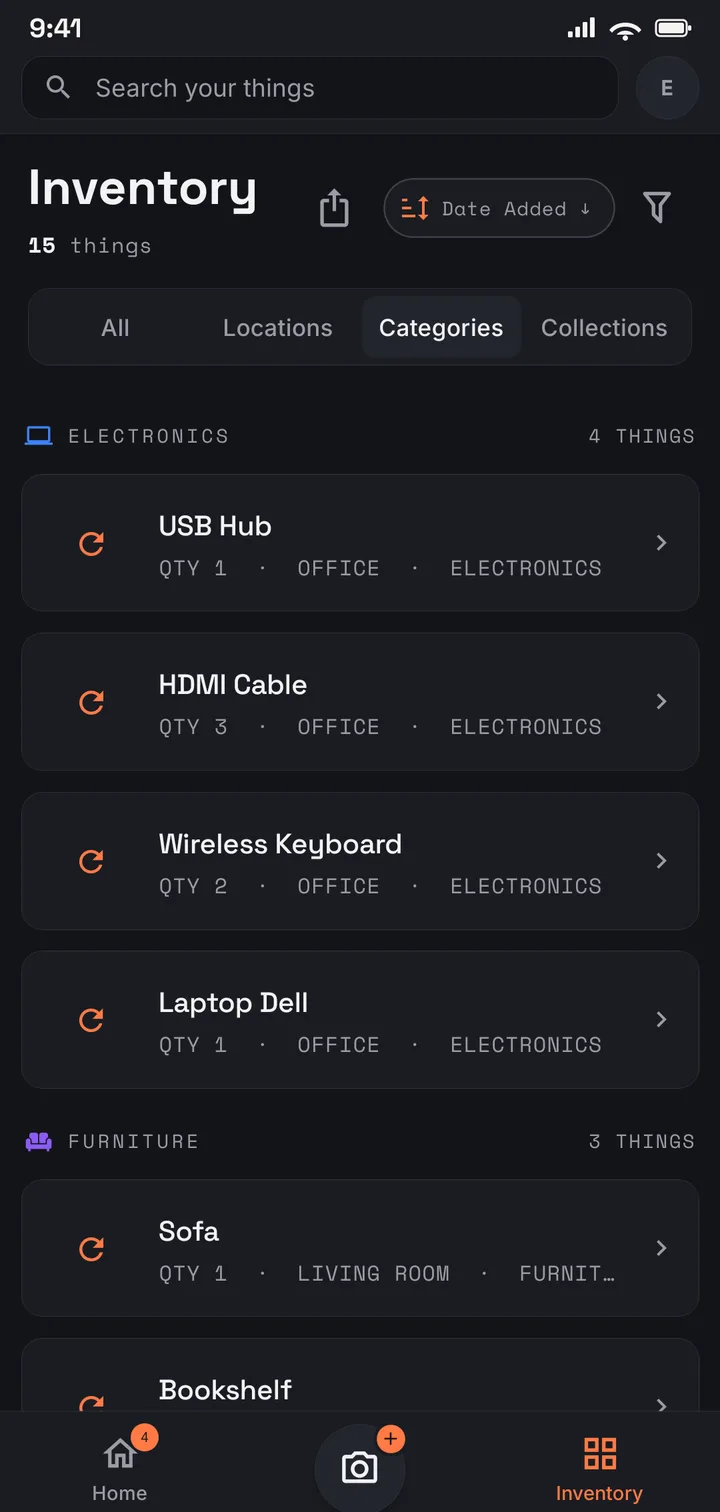
The listening-room wall, the office crates, the box in storage — one collection.
Where to start
Start free with 75 records — a crate or two. Plus fits a listening room: 1,000 records across 50 locations, with the itemised PDF report. A wall that has outgrown counting fits Pro (US$9.99/mo · US$99.99/yr): no item or location limits.
Use it in your browser today · Android on Google Play
Yes — pressing, year, label, matrix or runout details, whatever you check for. The description is free-form, and tags make any of it searchable: first pressings, mono copies, records still sealed.
Make each shelf or crate a location and file records to it. Filter to a location to see exactly what lives in it, and when you re-shelve, moving a record to its new place takes a couple of taps.
No. There is no barcode scanning and no database lookup — you photograph the records, AI drafts an entry per sleeve it can see, and you confirm. What you get in exchange is a record of your actual copies: your pressings, your condition notes, your photos — not a database’s idea of them.
Yes. It is tied to your account, encrypted in transit and at rest, never sold, and never used for advertising. It is shared only if you invite family members to it.